
FlyAndCry Airlines has introduced the Personal Item Confidence Fee, a new charge for passengers who approach the baggage sizer with a soft bag, a calm face and the dangerous belief that fabric, hope and geometry can combine into a free result.
The airline has observed the same consumer imbalance for years. A passenger buys a ticket, studies the rules for carry-on baggage, finds the least rigid bag in the closet and starts believing that if they squeeze the corners, turn the zipper away and avoid direct eye contact with the gate agent, the object will become a legal personal item. FlyAndCry does not consider this an innocent travel trick. It is confidence the market has failed to monetize.
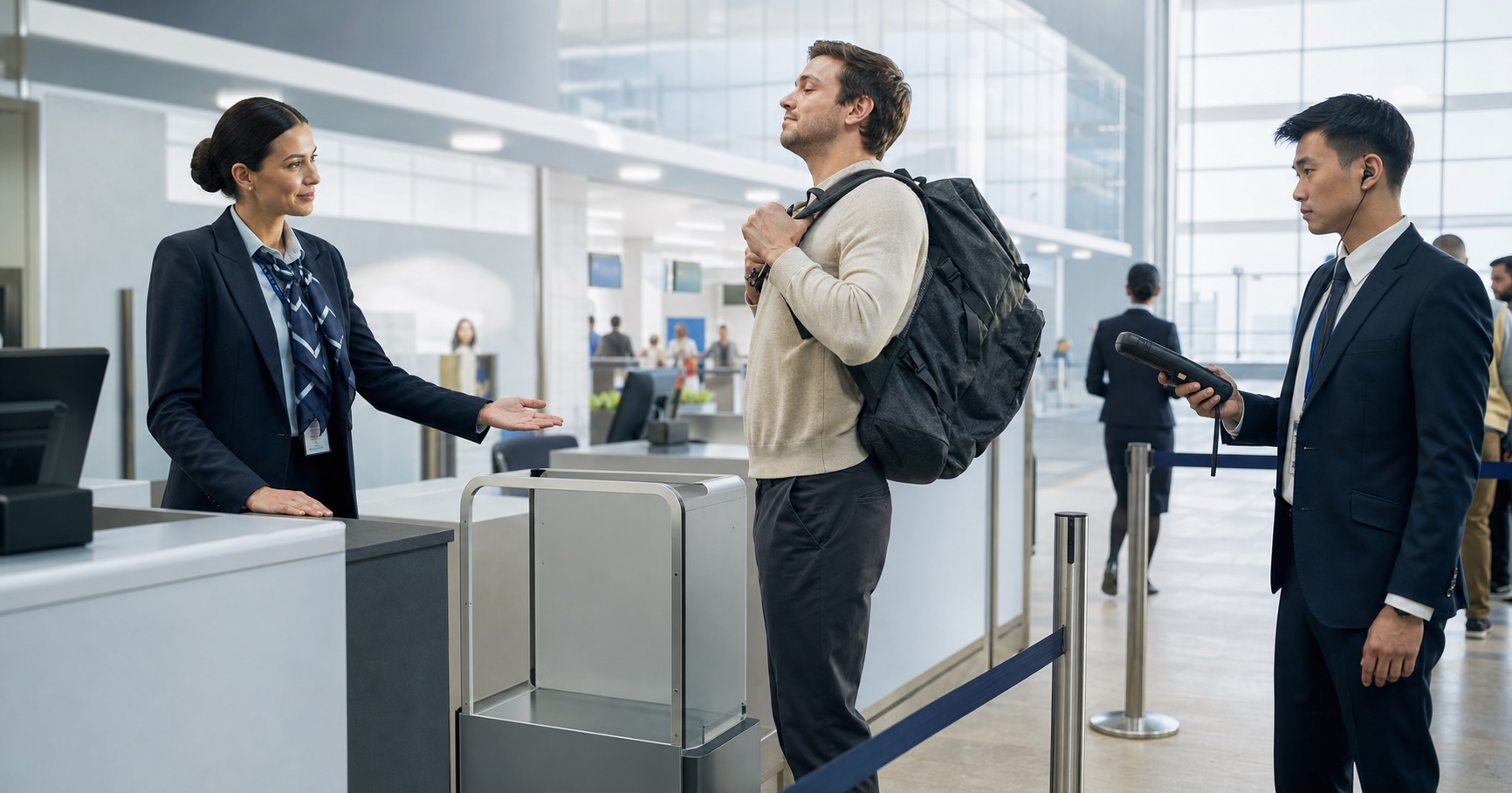
Previously, this belief was categorized as nervous creativity at the gate. It now has an honest financial status. If a passenger brings not merely an item but an argument that the item can be persuaded into the correct dimensions, the airline must issue a separate invoice. We have nothing against flexible fabric. We object to free hope.
What the Personal Item Confidence Fee includes
- Successful Sizing Hope Assessment: an official review of how convincingly you pretend the bag has always been this small.
- Soft-Edge Leniency Waiver: the airline’s legal right to count every protruding corner as actual volume rather than a creative mood expressed by the material.
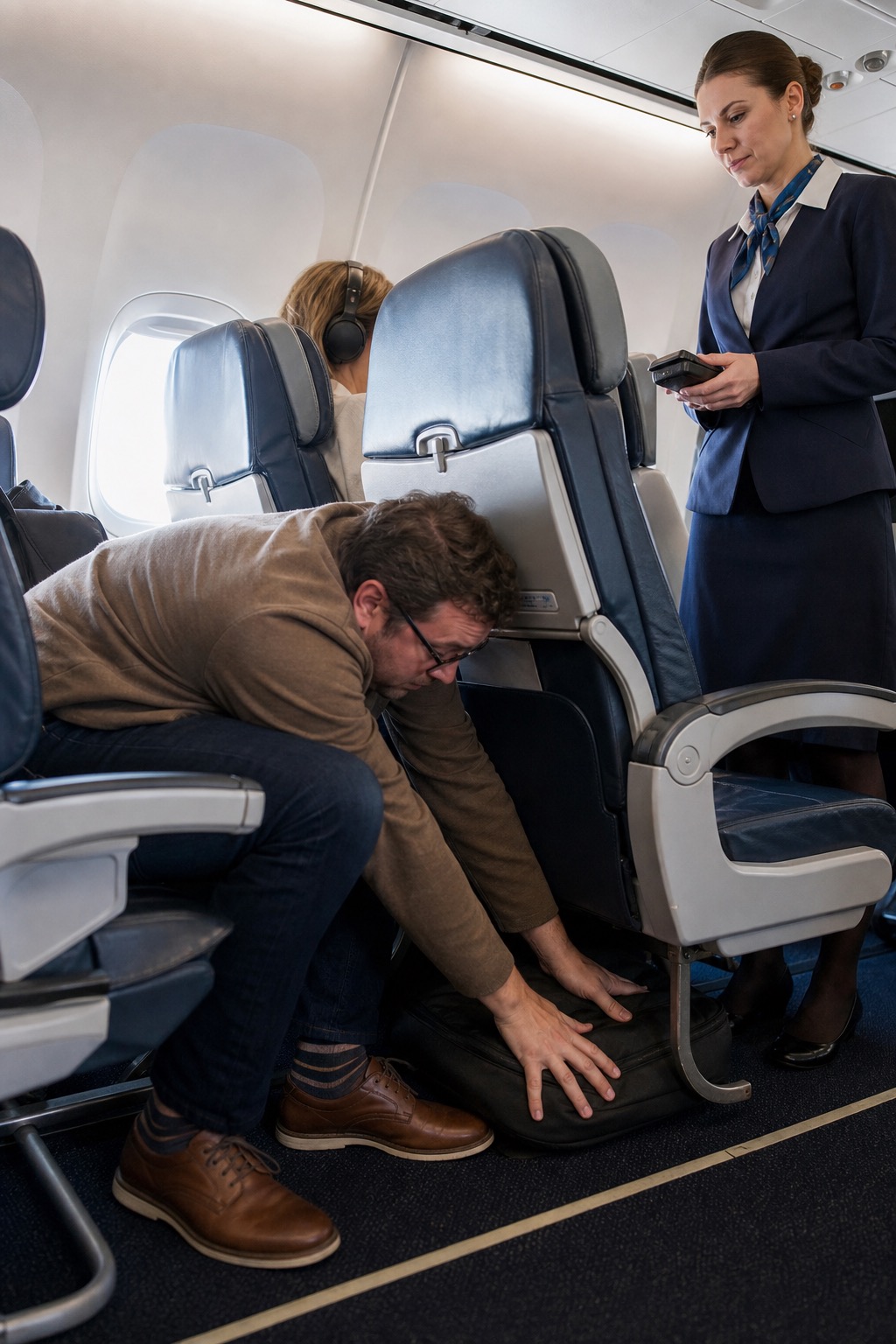
- Underseat Compression Period: a brief pre-boarding interval in which your knee, elbow and moral collapse may prove that the item deserves the space beneath the seat.
- Zipper Tension Certificate: a receipt confirming that the zipper was stretched to the point of a commercial dispute and still gave the market no reason for mercy.
- Post-Inspection Shame Receipt: a long document explaining exactly what your self-confidence cost before it encountered the baggage sizer.
Why one personal item is no longer enough
Passengers mistakenly believed an item either fits or it does not. FlyAndCry takes a more mature view. Between those two states lies a profitable gray area where the bag is already physically arguing with the rules while its owner remains emotionally convinced that facial expression, urgency and the general exhaustion of the queue can still win the case.
The situation becomes especially dramatic for passengers on Basic Economy. This fare already proves that a ticket and comfort do not need to maintain a relationship. When a passenger on that fare arrives with a backpack that privately identifies as a small suitcase, they create a double threat: an attempt to preserve dignity and avoid a fee at the same time. The airline cannot overlook both violations.
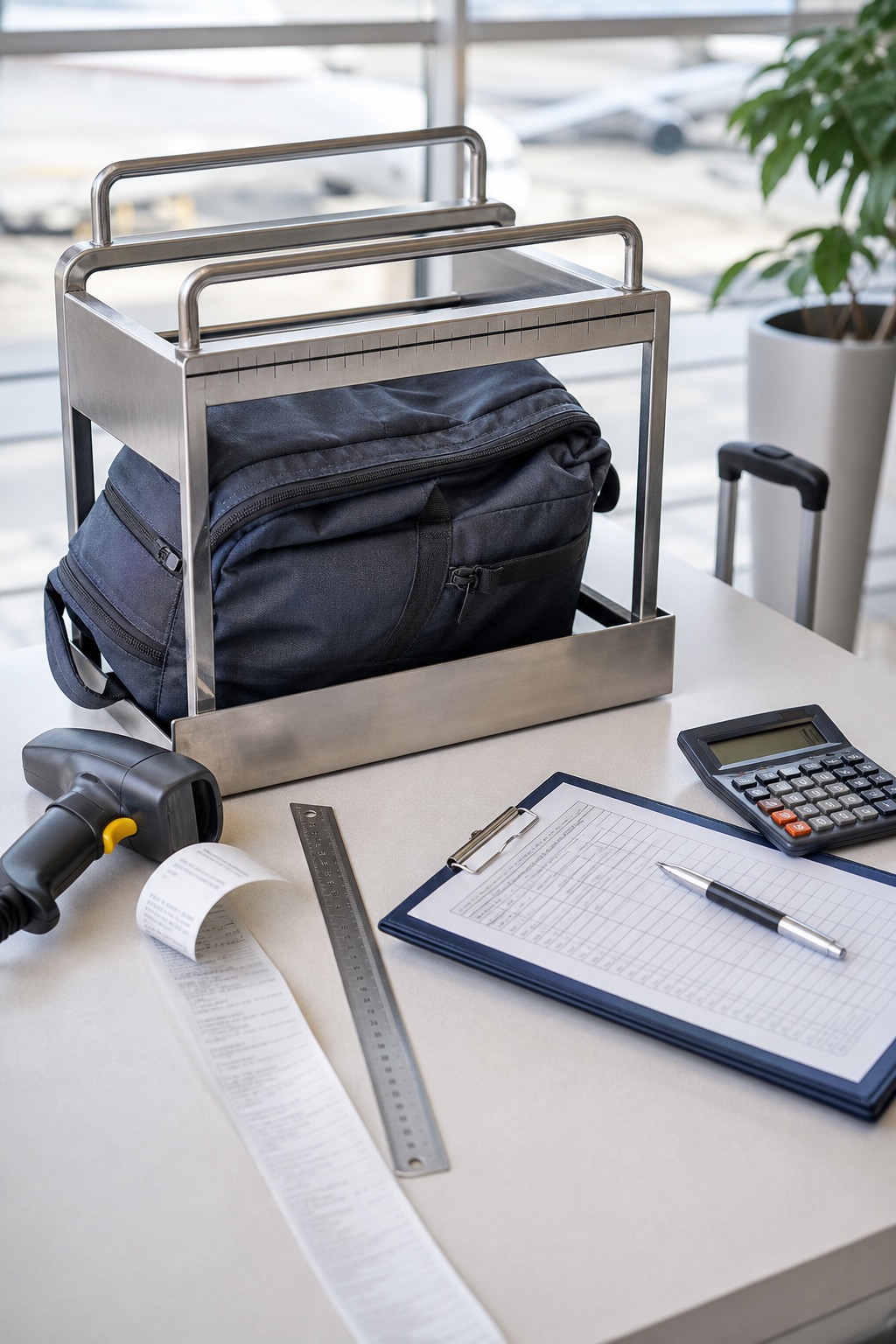
The system also protects honest people who paid in advance for a seat assignment, accepted their row and did not plan to turn the underseat area into a storage annex. Their legs already operate on a restricted budget. It would be unfair to let a neighbor import a second personality there for free in the form of a repacked travel bag.
How the confidence inspection works
The inspection begins with the passenger, not the item. A FlyAndCry agent analyzes how firmly you hold the bag, how quickly you say “it’s a personal item” and how much internal dishonesty the fabric can endure over the next thirty seconds. If your confidence exceeds the permitted allowance, the official assessment begins.
The bag then completes three stages. First comes visual interrogation. Next comes an attempt at peaceful placement in the sizer. Finally, the commercial phase determines whether the item is too large for the space under the seat, too soft for honest measurement or simply too arrogant for free passage. Complex cases may also consider your current boarding group, the mood of the queue and our willingness to explain anything twice.
If the bag fails, the passenger may choose between paying the fee, publicly recompressing the contents and entering the late realization that checking it earlier might have been easier. This is not punishment. It is an educational meeting between human optimism and a corporate ruler.
Fares, consequences and related forms of humiliation
The Personal Item Confidence Fee does not exist in isolation. It complements the wider ecosystem of paid consent already occupied by the change fee, decorative proximity to an overhead bin and the traditional gate-side moment when baggage dimensions suddenly begin expanding with boarding.
- Fabric Optimism Surcharge: for bags soft enough to appear legal only while compressed.
- Last-Minute Reclassification: for a personal item that spiritually becomes full-size carry-on baggage minutes before boarding.
- Knee Displacement Notice: for an approved item that occupies space previously promised to your legs.
- Queue-Side Repacking Privilege: permission to display your socks, chargers and remaining self-respect directly beside the gate.
FlyAndCry is especially proud that the new fee requires nothing additional from the airline. We do not enlarge the space under the seat, improve the journey or relax the rules. We have simply identified another moment when the passenger is already nervous, already late and psychologically prepared to pay so the conversation ends before boarding begins.
At FlyAndCry
We do not transport belongings. We sell a short conflict between your confidence and our measurements, then carefully capitalize the winner. If the bag fits, you fly. If it does not, you pay. If it almost fits, real commerce begins.
The Personal Item Confidence Fee is now active wherever a passenger considers softness proof of innocence and an airline considers it a reason to open the register
Related FlyAndCrypedia: Personal Item.
Related FlyAndCrypedia: Baggage Sizer.