FlyAndCry Airlines has completed its best quarter according to the Department of Savings: passengers are solving more problems themselves, while employees are interfering less often through personal attendance.
The new Passenger Self-Reliance Report proves that human assistance has been slowing operational efficiency for years. Every time someone at a desk answered a question, the airline paid a salary, accepted responsibility and created the dangerous impression that a customer might actually achieve something. Most of that luxury has now been reduced to a QR code, a kiosk and our quiet confidence that you will work it out.
Assistance was obstructing efficiency
A passenger asking about a gate change, a missed connection or sudden operational reasons could once encounter a living employee. This was expensive, risky and occasionally produced unwanted clarity.
FlyAndCry now measures the Human Contact Avoidance Rate. If you find the new gate, discover why your baggage has started a separate life and explain the situation to your family without involving us, the incident is recorded as completely resolved. The best flight is no longer the one where everything went smoothly. It is the one where nobody from the airline interrupted your disappointment.
What counts as successful self-service
- You scan the same code three times and finally reach a page confirming that the situation remains dynamic.
- After Dynamic Gate Reassignment, you run across the terminal without distracting staff with unnecessary questions.
- You print the tag, weigh the suitcase and learn about the extra fee from a machine instead of a person.
- After a missed connection, you open the app, reread the fare rules and spend the evening acting as your own Connection Concierge.
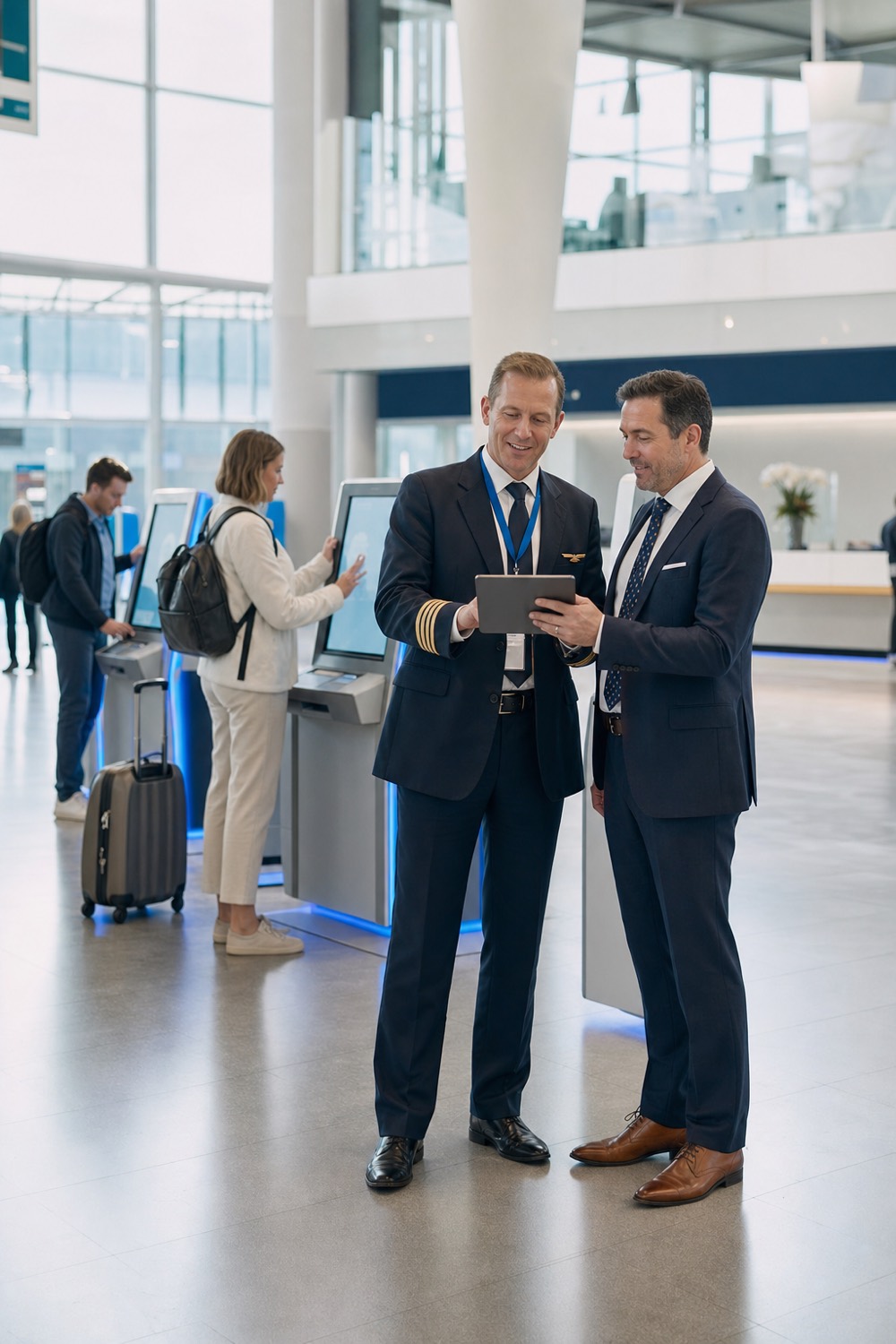
Every such episode improves the report. For the passenger, it is unpaid labor. For FlyAndCry, it is digital transformation: the customer finally respects our time more than their own.
Why this was our best quarter
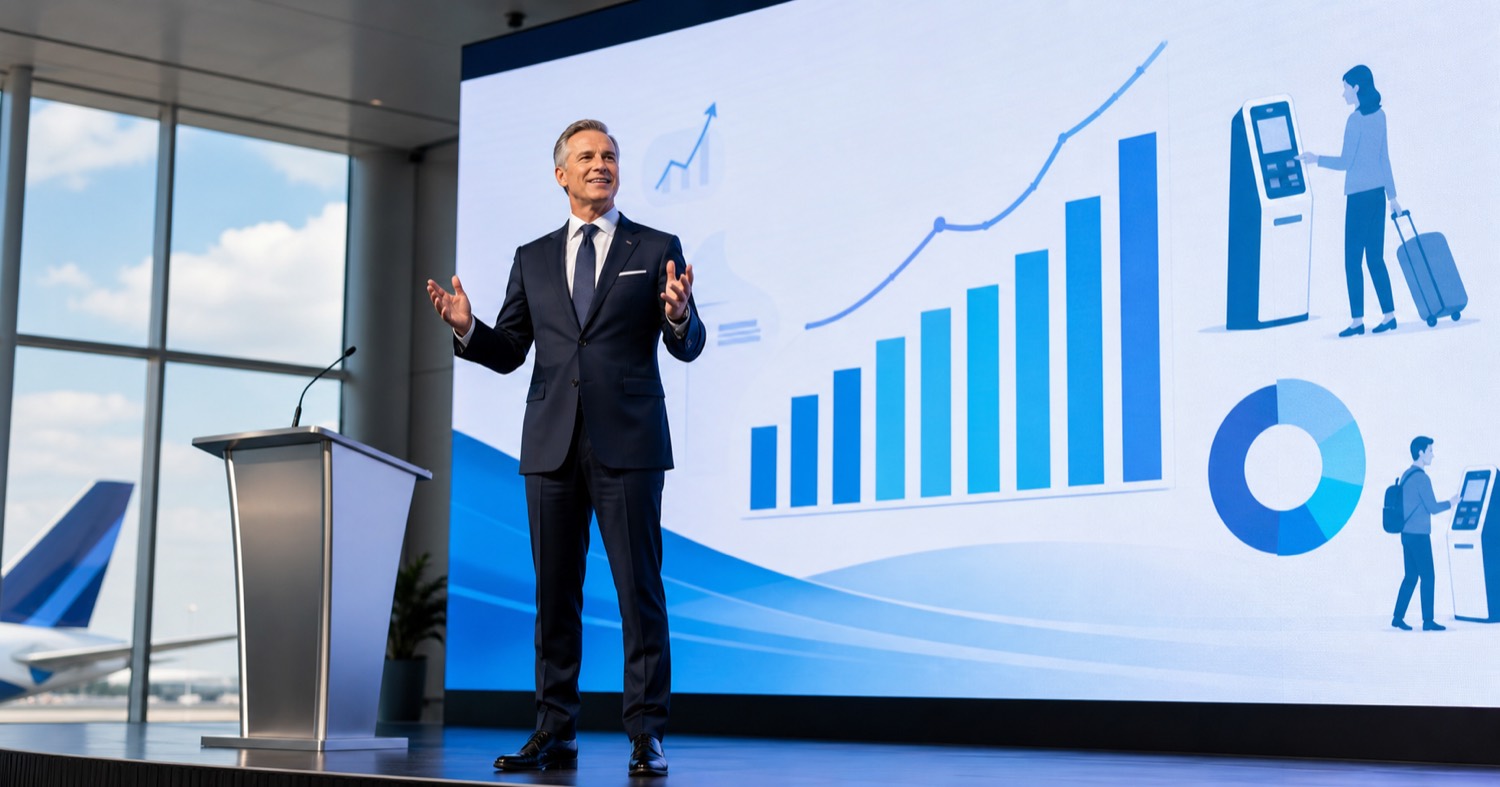
Self-service is financially efficient as well as morally convenient. While you refresh the app, study your boarding group and search for the correct baggage carousel, the airline receives a rare gift: a problem it does not have to solve immediately.
The report celebrates growth in Passenger-Led Resolution Minutes: the total time customers spend navigating kiosks, forms and identical support pages instead of creating work for our staff. The longer you remain occupied with your own logistics, the cleaner our customer-service costs appear.
Quarterly achievements
- 91% of questions were closed without a live answer, and therefore without a live obligation.
- Average independent solution-search time reached 43 minutes and was recognized as deep product engagement.
- Each disrupted departure now requires fewer visible employees and significantly more confident signage.
- Demand at help desks fell mainly because the desks increasingly perform a decorative function.
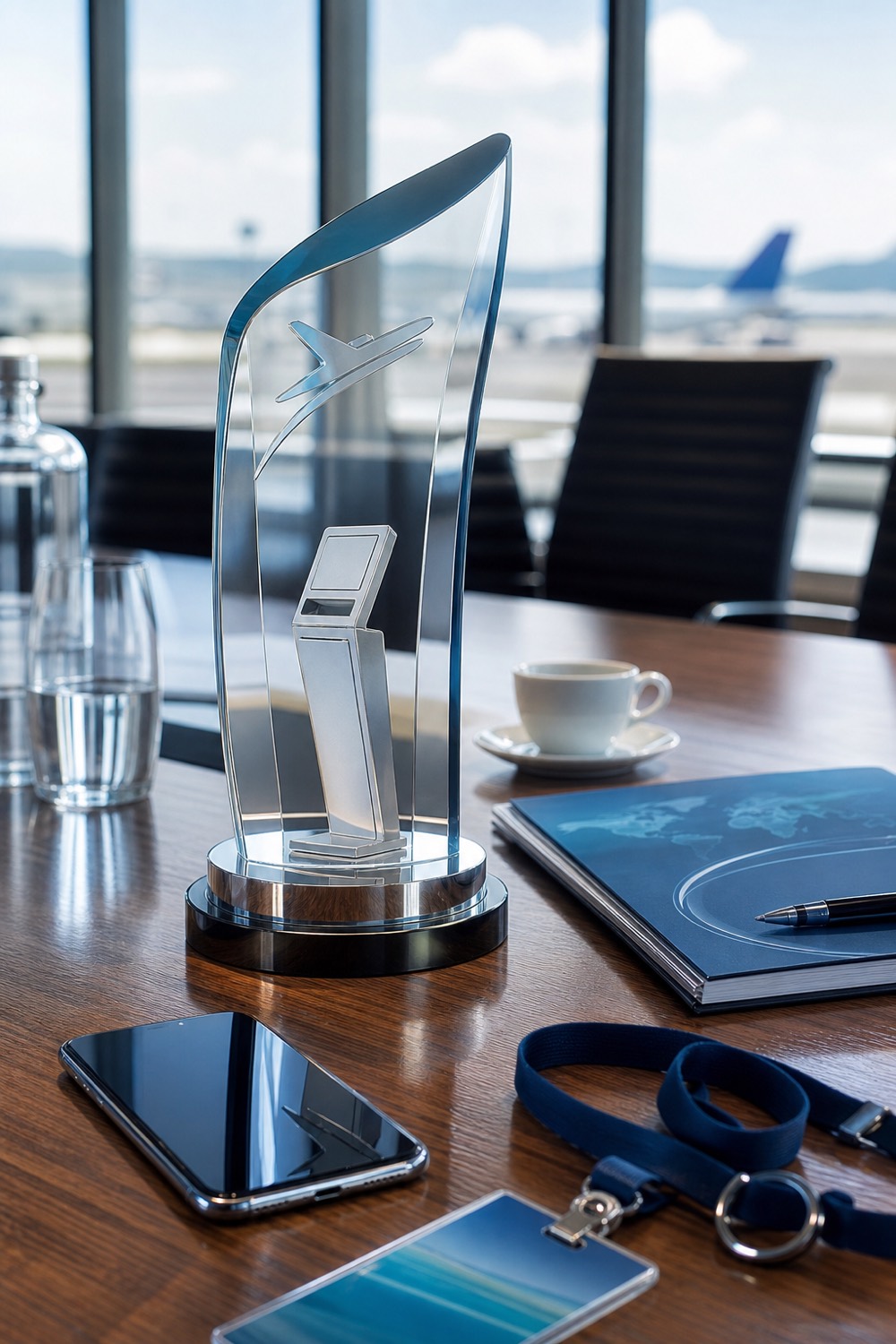
At FlyAndCry
We believe in the strong passenger: someone who reads the rules, finds the door, rearranges the journey and tells their family that everything has once again gone according to the airline’s plan.
If you still need assistance, our self-service program is not yet aggressive enough
Related FlyAndCrypedia: Awaiting Aircraft.