

A personal item is a small piece of cabin baggage that an airline allows a passenger to bring in addition to, or instead of, a larger carry-on bag. It normally has to fit beneath the seat in front, but exact size and weight rules belong to the operating airline.
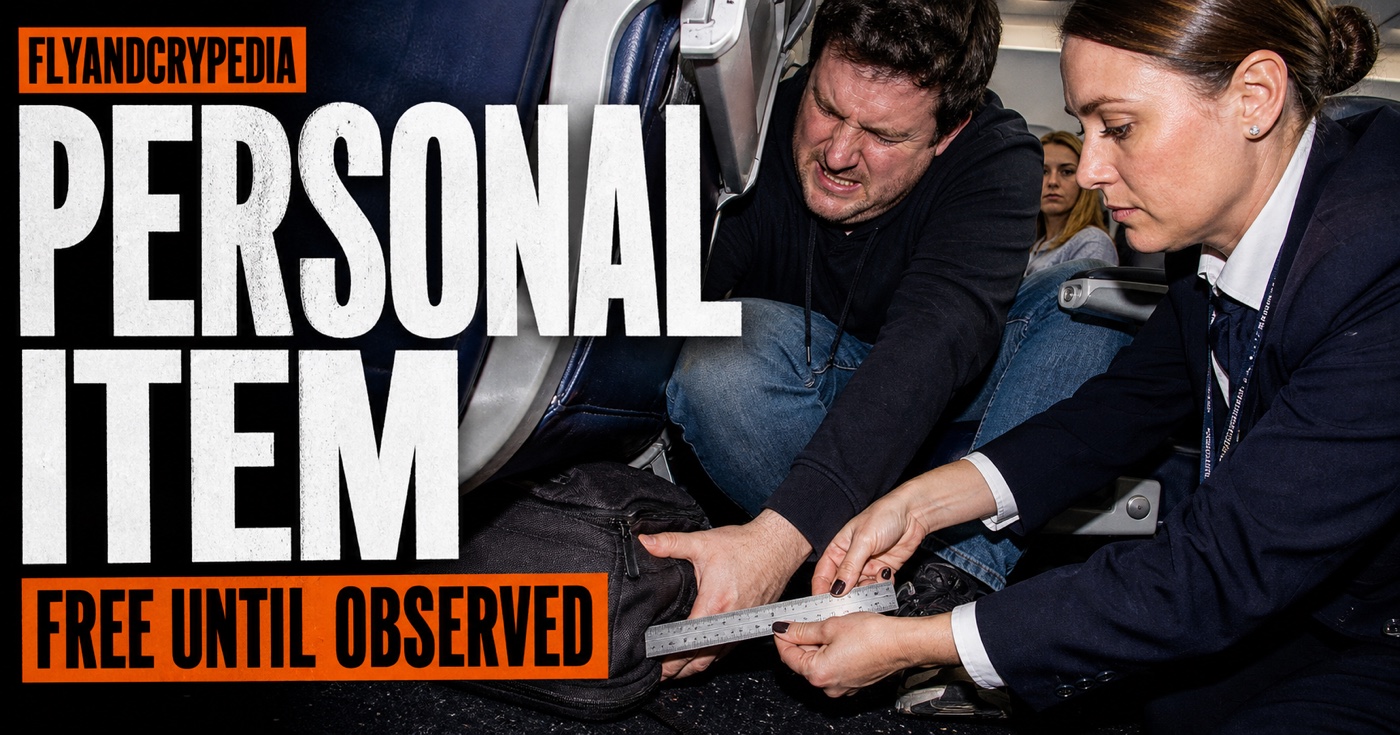
The FlyAndCry definition
A bag small enough to travel free until an employee looks directly at it.
The personal item is aviation’s most emotional unit of measurement. It is not judged only in centimetres. It is judged by confidence, softness, wheel visibility and whether the gate agent has recently received a memo about ancillary revenue.
What counts as a personal item?
Common examples include a handbag, laptop bag or small backpack. The useful test is whether it meets the airline’s published limit and fits under the seat. The dangerous test is whether you can say “it always fits” while approaching a metal frame designed by somebody who invoices optimism.
A personal item does not automatically include access to the overhead bin. That shared space is reserved for passengers who arrived first, paid more or possess the upper-body strength to defend disputed territory.
How is a personal item measured?
Officially, with dimensions. In practice, with a long silence followed by an employee tilting their head. The bag is then compared with the sizer, the passenger’s posture and the amount of joy still visible in the departure area.
Experienced travellers remove water bottles, wear three jackets and distribute chargers among family members like assets before a financial collapse. This does not make the bag smaller. It merely ensures that when dignity is declared dead at the gate, the estate has already been divided.
The final examination is performed under fluorescent light while the queue watches. If the bag fits, nobody applauds. If it does not, twenty strangers suddenly become expert witnesses for the prosecution.
What happens after it passes?
The successful item is placed under the seat, where it consumes the exact space once advertised for your feet. For the rest of the flight, you and the backpack negotiate a border neither side can cross. By landing, circulation below the knee has become a premium memory.
At FlyAndCry
We replaced fixed dimensions with the Personal Item Confidence Fee. The calmer you look, the more suspicious the bag becomes. Soft sides are measured while exhaling. Straps count as structural ambition. A laptop charger may be classified as a second household.
If the item fits beneath the seat, we congratulate it on qualifying for your missing legroom. If it does not, we send it to the hold and send your dignity ahead on standby.
See also
Carry-On Baggage, Overhead Bin, Basic Economy, Seat Pitch, Personal Item Confidence Fee, FlyAndCrypedia, Baggage Sizer.