

FlyAndCry Airlines is establishing Middle Seat Appreciation Day, an official holiday for people who received no wall, no exit and no illusion of control, but did receive two foreign elbows and the full right to call themselves the load-bearing structure of economy class.
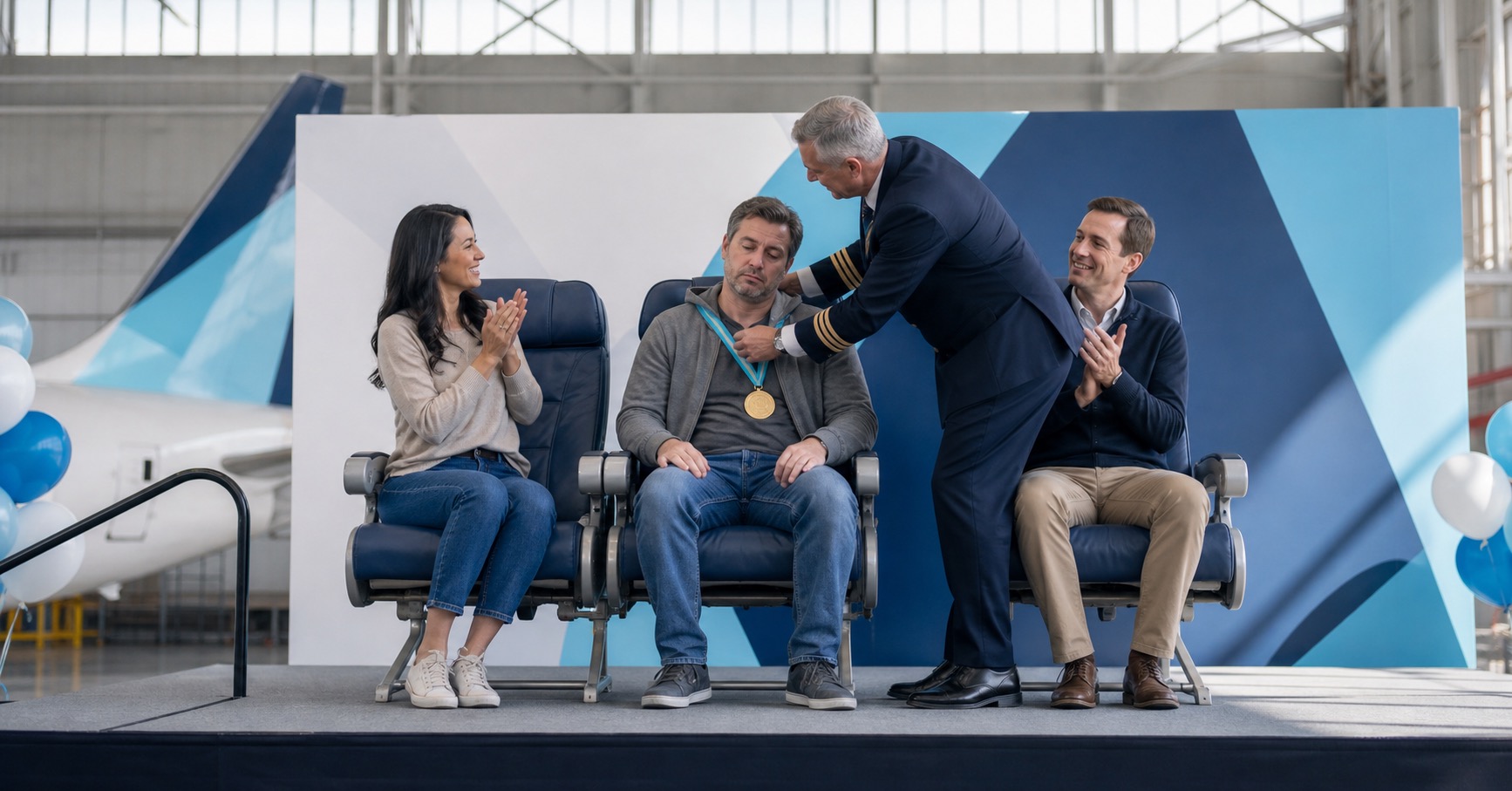
The airline has long felt that middle-seat passengers receive too little ceremonial respect for the amount of work they perform. They keep the cabin symmetrical, absorb both armrests, listen to two different styles of breathing and serve as a living partition between the person at the window, who already lives emotionally among the clouds, and the person on the aisle, who remembers every forty minutes that standing up is a constitutional right. FlyAndCry believes labor like this deserves a calendar date.
The new holiday is dedicated to everyone who did not buy luxury, but merely failed to complete seat assignment quickly enough, trusted basic economy too deeply or believed that the system distributes discomfort fairly. The company cannot return freedom to their shoulders, but it can at least turn their suffering into a formal corporate tradition.
What the official celebration includes
- The bilateral compression ceremony: symbolic recognition that you spent the entire flight making room for both neighbors while never fully belonging to yourself.
- The Central Endurance Medal: awarded to passengers who survived two armrests, one shared atmosphere and somebody else’s nap without leaving the row morally disassembled before descent.
- One minute of controlled straightening: a brief right to unfold your spine before the aisle passenger decides to stand up first.
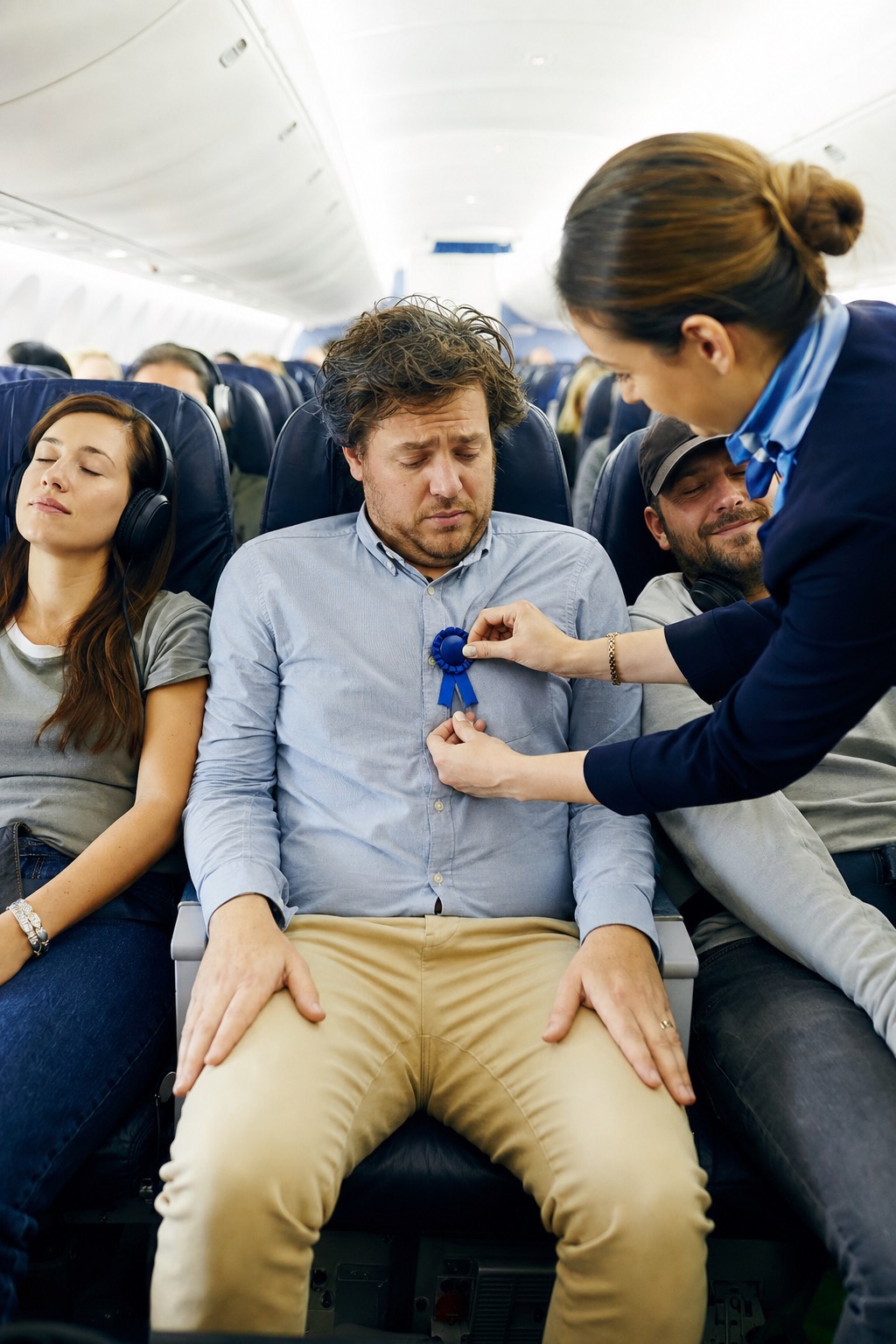
- An official gratitude photograph: documentary proof that your knees existed even when the space in front of them denied it.
- A Certificate of Central Presence: confirmation that you personally completed the row’s three-seat economic ecosystem.
Why the middle seat received its own holiday
The passenger at the window at least receives a wall and the right to pretend the view is compensation. The passenger on the aisle retains the illusion of mobility and the ability to turn the entire row into an administrative procedure without warning. Only the middle seat honestly admits that a flight is not a journey. It is the prolonged placement of a human compromise between two independent anatomical projects.
FlyAndCry considers this the summit of operational efficiency. It allows us to sell three tickets inside space that can ethically support approximately two and a half people. Better still, the middle seat reveals the true value of concepts such as seat pitch, restricted knee movement and the decorative width of an armrest. While other passengers continue debating comfort, the middle passenger already understands the essential truth: comfort would set a dangerous precedent.
The holiday also corrects decades of visual discrimination. Traditional airline advertising shows the window seat, an open aisle and passengers whose shoulders suspiciously touch nobody. FlyAndCry prefers honesty. If the economics of a flight depend on somebody traveling in the center of other people’s anatomy, that person deserves more than a ticket. They deserve a ceremony.
How we honor a middle-seat passenger
The program begins during boarding. Our employees carefully watch for anyone approaching a row with the expression that combines acceptance, exhaustion and one last hope that a neighbor will not arrive. When that hope dies directly in front of us, FlyAndCry considers the celebration officially underway.
Once seated, the passenger completes several symbolic stages. First comes confirmation of central status: both neighbors expand as if each purchased the air around you. Then comes the ritual of collective contact, when the aisle passenger asks to get out just as the window passenger decides to rearrange a jacket, bottle, charger and personal life trajectory. Finally, the passenger enters the long cabin-stabilization phase, sitting upright not because it is comfortable but because any other position would force the structure into conflict with human nature.
Special recognition goes to passengers whose forward seat reclined before boarding finished while both neighbors had already declared the armrests collective property. Under these conditions, the middle seat stops being a place and becomes an internal stabilization service for which FlyAndCry has spent years paying almost nothing beyond the price of admission.
Commemorative awards, privileges and forms of patience
To mark the holiday, the airline has created several official distinctions. Each is designed to remind you that your sacrifice was observed, measured and may later be mentioned attractively in a marketing report.
- The Medal for Bilateral Diplomacy: for passengers who spent the flight pretending both neighbors had an equal claim to their personal space.
- The Central Posture Citation: for anyone who remained upright for several hours while the cabin encouraged a letter shape not recognized by medicine.
- The Right to Exit Third: a ceremonial privilege to leave the row after everyone else has collected everything they occupied your shoulders to obtain.
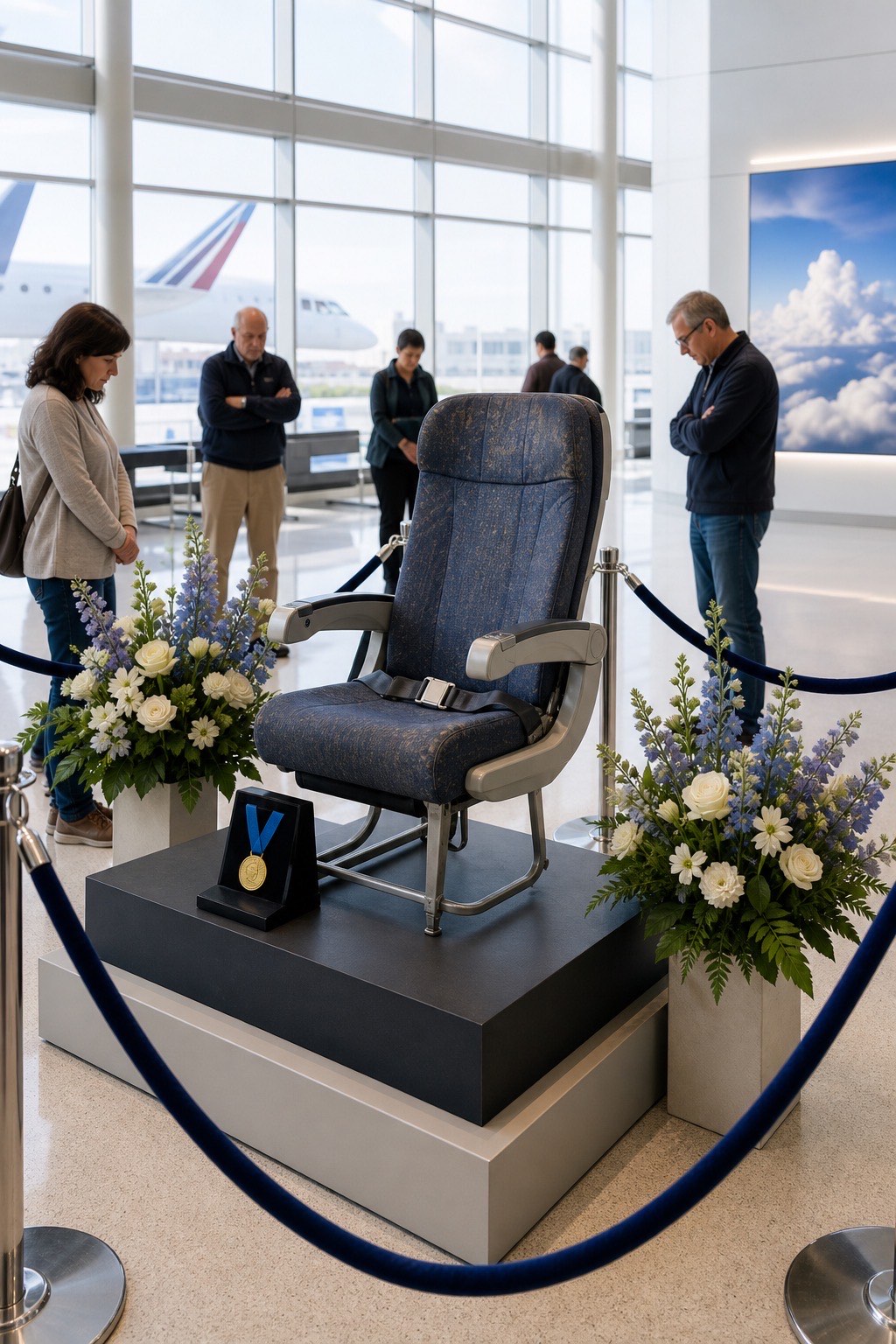
- A portrait beside the ceremonial seat: a photograph with an ideal middle seat that looks significantly wider for promotional purposes than yours did in service.
Naturally, the holiday does not alter the business model. FlyAndCry will not reduce cabin density, reconsider seat recline or suddenly give people more space without a separate revenue basis. Middle Seat Appreciation Day simply allows the company to state the truth with confidence: the center of the row is not a system defect. It is the system’s most disciplined source of income.
Passengers wishing to avoid the celebration may use our traditional market-based prevention tools: pay early, refresh the seat map, worry at the gate and hope their boarding group somehow aligns with human luck. FlyAndCry supports these dreams precisely until they interfere with filling every sellable centimeter of the cabin.
At FlyAndCry
We do not see the middle seat as a punishment. We see a perfectly positioned passenger absorbing maximum neighboring enthusiasm with minimum personal rights. This person is not merely flying. They are keeping the economics of the row in working order.
Middle Seat Appreciation Day is now observed on every flight where somebody’s patience sits exactly between your revenue at the window and your freedom on the aisle